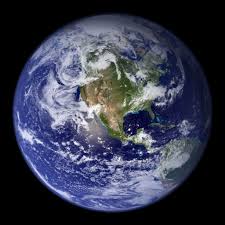
 Our Earth is amazing, beautiful, inspiring. We need it to survive. It provides us with everything we need and more.
These days, many professionals and economists say that everything we need from the Earth is called “natural capital”. It’s basically the extension of the economic concept of “capital” to the goods and services provided by the natural environment. Also becoming more mainstream is the term “ecosystem services” which covers benefits to humankind such as the provision of fish and water, the regulation of our climate, and the aesthetic qualities of our forests and coasts.
This winter, nature provided residents in the city of Ottawa with plenty of wonderful snow and ice. Canada´s capital region abounded with sleighing, skating, hockey, cross-country skiing, ice sculptures, snowmen and snowball making… In April it was still snowing. With all that cold, it was hard to imagine that our Earth is warming.
But it is. Sadly, our Earth, and the services it provides us, is in serious trouble. Largely because of us. The list of troubles seems to get bigger daily. The climate is changing, with more droughts and floods. Glaciers are melting and oceans are rising. More species face extinction. We are failing to halt the loss of biodiversity. Coastal reefs and mangroves are being lost. More animals are suffering in factory farms. We, our children, our food, our water and our soils are ever more inundated with chemicals.
There are too many of us. Too many people and nations compete for scarce resources such as water and minerals. We continue to explore, push frontiers, extract and build. Concrete is the most used manmade product on Earth, its output is increasing, it uses immense volumes of materials and energy, and is a huge contributor to climate change. Many of our economic policies continue to be short-term. Too many people living in cities don’t know what’s happening out there, where our goods come from, what drives our consumption, how goods are produced and at what cost.
We can improve the Earth´s environment through communications. This includes support for organizations that are specifically mandated to improve environmental issues such as UN agencies, governmental agencies (at all levels), scientific networks, NGOs and conservation groups. It can also be organizations which impact the environment through their activities, such as private companies through their production processes, or other governmental sectors such as agriculture, energy and fisheries.
“Denormalization”
“Denormalization” is a term that has been extensively used by the World Health Organization (WHO) in its communications activities. It had its origins in anti-tobacco campaigns as a means of promoting the idea that tobacco use should not be a mainstream activity within society. So many smokers had became convinced – helped by corporate communications and advertising – that smoking is “normal” and that it should be associated with many daily normal activities such as waking up, eating breakfast, having a drink, or reading the newspaper. One way to curb smoking, WHO believes, is to get smokers to smoke during “less normal” occasions during their day and to completely get rid of the notion that smoking should be a normal societal activity in any way. And their communications have led to great results.
WHO used the term further in trying to alleviate mental health illness. It was observed that, for many of us, it is quite “normal” to label mentally challenged people with such terms as “nuts” or “crazy”. Such stigmatization actually harms people under such labels, and may contribute to enhancing the problem. Society should therefore halt such stigmatizing actions.
Denormalization should also be applied to resolving environmental issues. There are so many routine activities which we now consider to be normal, but which actually harm the environment. This includes polluting, using chemicals, over-exploitation of resources, and raising animals in factory farms while causing them undo suffering. Let´s encourage society to realize that such actions should not be normal. Let´s make sustainability the norm. Communications can help.
 earthly communications